What Would God Be Like If He Were Human?
Because God created us in His own image, we get some idea of what God is like by looking at ourselves. But we are physical, finite, and fallen beings. God is (as the Westminster Shorter Catechism captures it) a Spirit, infinite, eternal, and unchangeable in His being, wisdom, power, holiness, justice, goodness, and truth. That statement, however, is designed to answer a very specific question: What is God? A related but slightly different question is, What is God like? The Westminster statement begins to answer that toward the end; it is a good statement, but not exactly a targeted answer to my second question and certainly not a comprehensive one. So, what would God look and act and be like if He could, by some bizarre miracle, actually become a human, like us, so that we could see Him, watch Him, listen to Him, eat with Him, and even touch Him? That is precisely the question the incarnation answers. Before I go there, though, I want to explore the previous question a bit more directly. What is God like?
Exodus 34: The Premier Expression of God’s Glory
Exodus 34 is a standout passage for defining the character of God for three reasons. (1) It is a condensed catalog of multiple aspects of God’s character. (2) Because it is echoed over and over in a surprising number of passages and situations, it is perhaps the single most defining passage for describing what God is like. And, (3) it comes directly from the mouth of God Himself, not merely in the sense that it is in the Bible and therefore God’s Word, but because God is telling Moses what He is like—just because Moses asked.
The incident itself is mesmerizing, but it’s the context that makes it so startlingly unexpected. Israel has been encamped at Mount Sinai for something like two months. There God has already manifested His presence with smoke and fire and rumbling thunder and blaring angelic trumpets. Terrified by this display of God’s presence, Israel swears they will do whatever the Lord commands them (Ex 19:8). So, God lays down His Law for them—with all of its commandments and warnings and threats and penalties—and, again, the people swear (twice more!) that they will do everything God says (Ex 24:3, 7). God then calls Moses up onto the mount to receive more of His laws. Moses descends (Ex 32) to find the laws God had already given being shattered with abandon by the very people who had three times sworn, only six weeks earlier, absolute loyalty and submission to Yahweh. God threatens to destroy the entire nation, but Moses intercedes for them and God withdraws His threat.
That’s the setting for Moses’ astonishing request—“Please, show me Your glory” (Ex 33:18). Wouldn’t you say he had already seen a good bit of God’s glory—the plagues on Egypt, the exodus, the Red Sea, the mountain with its the smoke and fire and thunder and trumpets, the repeated miraculous provision of water and food? The only thing more astonishing than Moses’ request, however, is God’s reply—not just “I will,” and not even, “I will show you My glory,” but this: “I will make all my goodness pass before you.” Moses asks to see God’s glory and God agrees to show Moses his goodness. Not instead. God is not proposing a substitute for Moses’ request; He is fulfilling it. In the wake of all that has happened over the previous few months, God wants to make this point: His glory is His goodness, His goodness is His glory. But what, exactly, does that look like?
The next morning (Ex 34:2) God “descended” on Mount Sinai “and stood with him there” (Ex 34:5).
And the Lord passed by before him and proclaimed, The Lord, the Lord God, compassionate and gracious, slow to anger, and abounding in lovingkindness and truth, who keeps lovingkindness for thousands, who forgives iniquity and transgression and sin . . . . (34:6–7)
Yes, God’s glory includes his justice and his judgment: “by no means clearing the guilty” (34:7). But when God displays His glory to Moses, here is what he puts first and emphasizes most:
- Compassion
- Graciousness
- Slowness to anger
- Not just lovingly loyal [chesed], but abounding in loving loyalty
- Not just trustworthy, but abounding in truth and therefore infinitely trustworthy
- Maintaining His loyalty to His people
- Forgiving iniquity and transgression and sin
That is what God forestages and displays most prominently as His glory. These expressions become the bedrock confidence of those who know Him, this divine self-revelation the fount from which His people will drink for centuries.
Moses cites it as the ground of his intercession that God would spare His people despite their rebellion:
But now, I pray, let the power of the Lord be great, just as You have declared, “The LORD is slow to anger and abundant in lovingkindness, forgiving iniquity and transgression; but He will by no means clear the guilty, visiting the iniquity of the fathers on the children to the third and the fourth generations.” Pardon, I pray, the iniquity of this people according to the greatness of Your lovingkindness, just as You also have forgiven this people, from Egypt even until now. (Num 14:17–19)
It was the basis on which Moses encouraged God’s wayward people that He would accept them if they returned to Him:
When you are in distress and all these things have come upon you, in the latter days you will return to the LORD your God and listen to His voice. For the LORD your God is a compassionate God; He will not fail you nor destroy you nor forget the covenant with your fathers which He swore to them. (Dt 4:30–31)
David and the other psalmists constantly fell back on God’s self-description to Moses to encourage their confidence in appealing to Him in their need:
Incline Your ear, O LORD, and answer me; for I am afflicted and needy. . . . Make glad the soul of Your servant, for to You, O Lord, I lift up my soul. For You, Lord, are good, and ready to forgive, and abundant in lovingkindness to all who call upon You. (Ps 86:1–5)
O God, arrogant men have risen up against me, and a band of violent men have sought my life, and they have not set You before them. But You, O Lord, are a God merciful and gracious, slow to anger and abundant in lovingkindness and truth. (Ps 86:14–15)
The cords of death encompassed me and the terrors of Sheol came upon me; I found distress and sorrow. Then I called upon the name of the LORD: "O LORD, I beseech You, save my life!" Gracious is the LORD, and righteous; yes, our God is compassionate. (Ps 116:3–5)
Exodus 34 fueled the praises of the psalmists as well:
Bless the LORD, O my soul, and forget none of His benefits. . . . He made known His ways to Moses, His acts to the sons of Israel. The LORD is compassionate and gracious, slow to anger and abounding in lovingkindness. (Ps 103:2, 8)
I will give thanks to the LORD with all my heart, . . . He has made His wonders to be remembered; the LORD is gracious and compassionate. (Ps 111:1, 4)
How blessed is the man who fears the LORD, who greatly delights in His commandments. . . . Light arises in the darkness for the upright; He is gracious and compassionate and righteous. (Ps 112:1, 4)
Men shall speak of the power of Your awesome acts, and I will tell of Your greatness. They shall eagerly utter the memory of Your abundant goodness and will shout joyfully of Your righteousness. The LORD is gracious and merciful; slow to anger and great in lovingkindness. (Ps 145:6–8)
It was the basis of Hezekiah’s appeal to the Assyrian-battered remnants of the northern kingdom to return to the Lord and observe the Passover in Jerusalem:
For if you return to the LORD, your brothers and your sons will find compassion before those who led them captive and will return to this land. For the LORD your God is gracious and compassionate, and will not turn His face away from you if you return to Him. (2 Chr 30:9)
Joel echoes God’s own call to repentance, by anchoring his plea in Exodus 34:
“Yet even now,” declares the LORD, “Return to Me with all your heart, and with fasting, weeping and mourning; and rend your heart and not your garments.” Now return to the LORD your God, for He is gracious and compassionate, slow to anger, abounding in lovingkindness and relenting of evil. (Joel 2:12–13)
Its strangest echo comes from the mouth of Jonah, who actually complained that God would be this way even towards the pagans of Nineveh:
But it greatly displeased Jonah and he became angry. He prayed to the LORD and said, "Please LORD, was not this what I said while I was still in my own country? Therefore in order to forestall this I fled to Tarshish, for I knew that You are a gracious and compassionate God, slow to anger and abundant in lovingkindness, and one who relents concerning calamity. (Jon 4:1–2)
Daniel relies on it as the basis of his prayer that God would fulfill His prophetic promises through Jeremiah to bring Judah back from their well-deserved captivity:
To the Lord our God belong compassion and forgiveness, for we have rebelled against Him. (Dan. 9:9)
Finally, back in the land, Nehemiah quotes the same passage in his prayer, rehearsing Judah’s history of unfaithfulness and God’s goodness in bringing them back from captivity in answer to Daniel’s prayer:
They refused to listen, and did not remember Your wondrous deeds which You had performed among them; so they became stubborn and appointed a leader to return to their slavery in Egypt. But You are a God of forgiveness, gracious and compassionate, slow to anger and abounding in lovingkindness; and . . . You, in Your great compassion, did not forsake them in the wilderness . . . . . However, You bore with them for many years, and admonished them by Your Spirit through Your prophets, yet they would not give ear. . . . Nevertheless, in Your great compassion You did not make an end of them or forsake them, for You are a gracious and compassionate God. (Neh. 9:17–19, 30–31)
No other passage distills the glory of God within the span of so short a space of direct divine speech as the consummate display of His goodness in Exodus 34:6–7. And no other passage became such a mine of rich treasure from which God’s people fueled their praise and worship, and extracted confidence for their darkest moments.
John 1: The Incarnation of God’s Glory
To return to my earlier question, then, what would God look and act and be like if He could actually become a human like us, so that we could see Him, watch Him, listen to Him, eat with Him, and even touch Him. Perhaps the premier passage that answers that question is John 1. The opening of John 1 draws heavily on Genesis 1–2. Isolated parallels may not seem significant in and of themselves, but the aggregate of multiple parallels is impressive. I was surprised, however, to discover recently a number of links between John 1:14–18 and Exodus 33–34.
And the Word became flesh, and dwelt among us, and we saw His glory, glory as of the only begotten from the Father, full of grace and truth. . . . For of His fullness we have all received, and grace upon grace. For the Law was given through Moses; grace and truth were realized through Jesus Christ. No one has seen God at any time; the only begotten God who is in the bosom of the Father, He has explained Him. (Jn. 1:14-18)
Moses figures prominently in both Exodus (33:18; 34:1, 4, 8) and John (1:17). Inseparable from Moses is the Law in both Exodus (34:1) and John (1:17). More importantly, both passages are all about seeing God. The Exodus account highlights the importance of sight; Moses’ request, “show me” (lit., cause me to see, Ex 33:18) is answered, “You cannot see my face, for no man can see me and live” (Ex 33:20, 23); nevertheless, God continues, “you shall see my back but My face shall not be seen” (Ex 33:23). John, likewise, juxtaposes both the idea that “no man has seen God at any time” (Jn 1:18) with the insistence that we “saw” God manifest in flesh (Jn 1:14).
Most significantly, both passages are all about seeing God’s glory. Moses requests, “cause me to see your glory” (Ex 33:18), and God promises that Moses will see “My glory” (33:22). John specifies that when the Word became flesh, “we saw his glory, glory as of the only begotten of the Father” (Jn 1:14). And among those attributes God forestaged as the manifestation of His glory are these: gracious and abounding in truth (Ex 34:6). Likewise the Incarnate Word was “full of grace and truth” (Jn 1:14, 17).
Finally, Moses’ immediate request upon seeing God’s glory was, “Lord, I pray, let the Lord go among us” (Ex 34:9). The Word who became flesh, full of the glory, grace, and truth of Yahweh, “dwelt among us” (Jn 1:14).
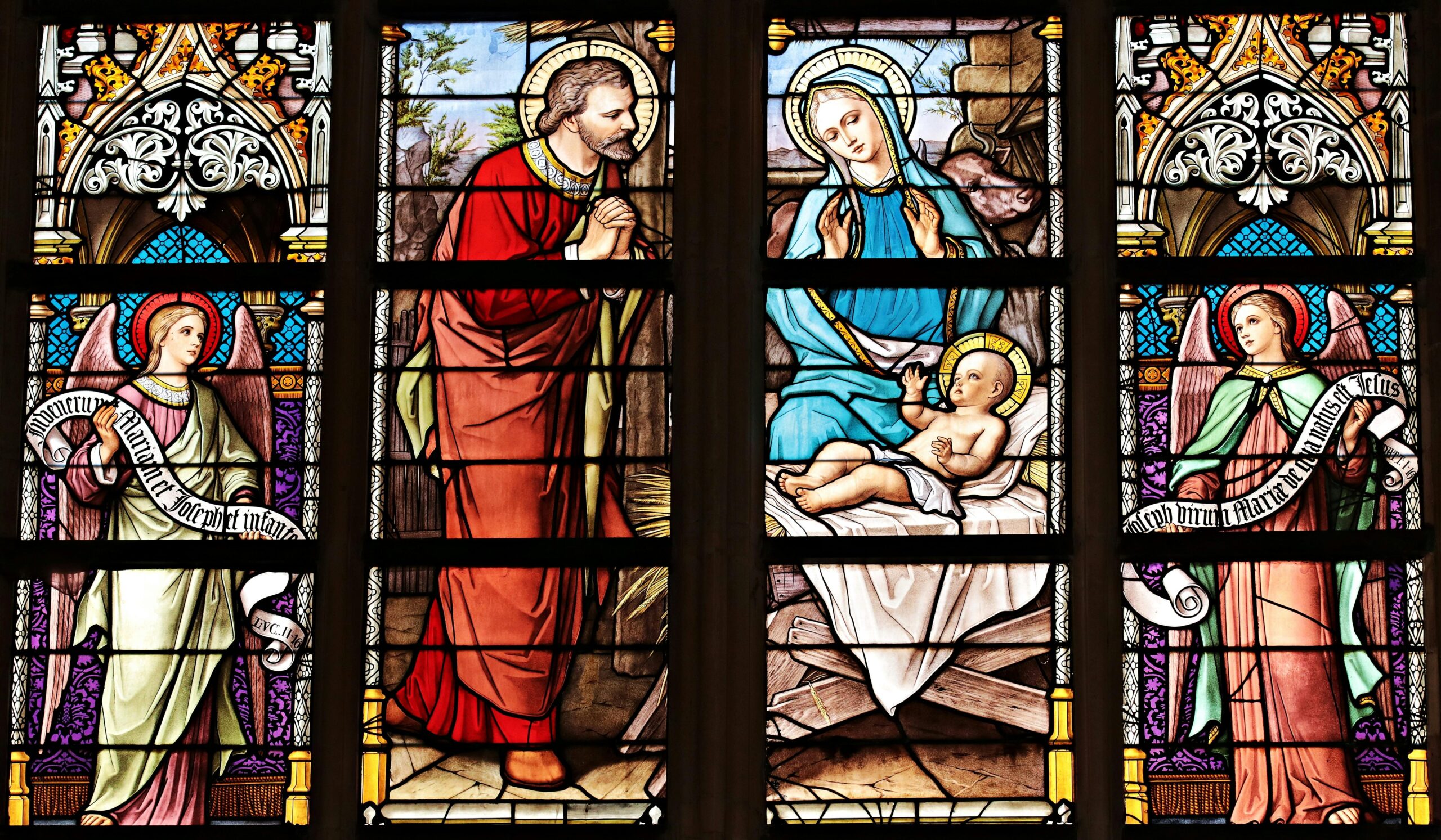
John 1 identifies the Word with and as the Yahweh of Exodus 34. The Gospels go on to display in the life and ministry of Jesus every aspect of the divine character revealed to Moses. The incarnation of Jesus the Christ was a 30-year demonstration in the flesh of the truth of Exodus 34:6–7. As Emmanuel (God with us) He was—and is—“the Lord, the Lord God, merciful and gracious, long-suffering and abundant in goodness and truth, who keeps lovingkindness for thousands, who forgives iniquity and transgression and sin.” And He, too, will by no means clear the guilty (Jn 5, 12; Rev 20:12, 13).
As “very God of very God,” Jesus embodies (literally!) all the facets of God’s glorious goodness displayed to Moses fourteen centuries earlier. And that is worth celebrating.