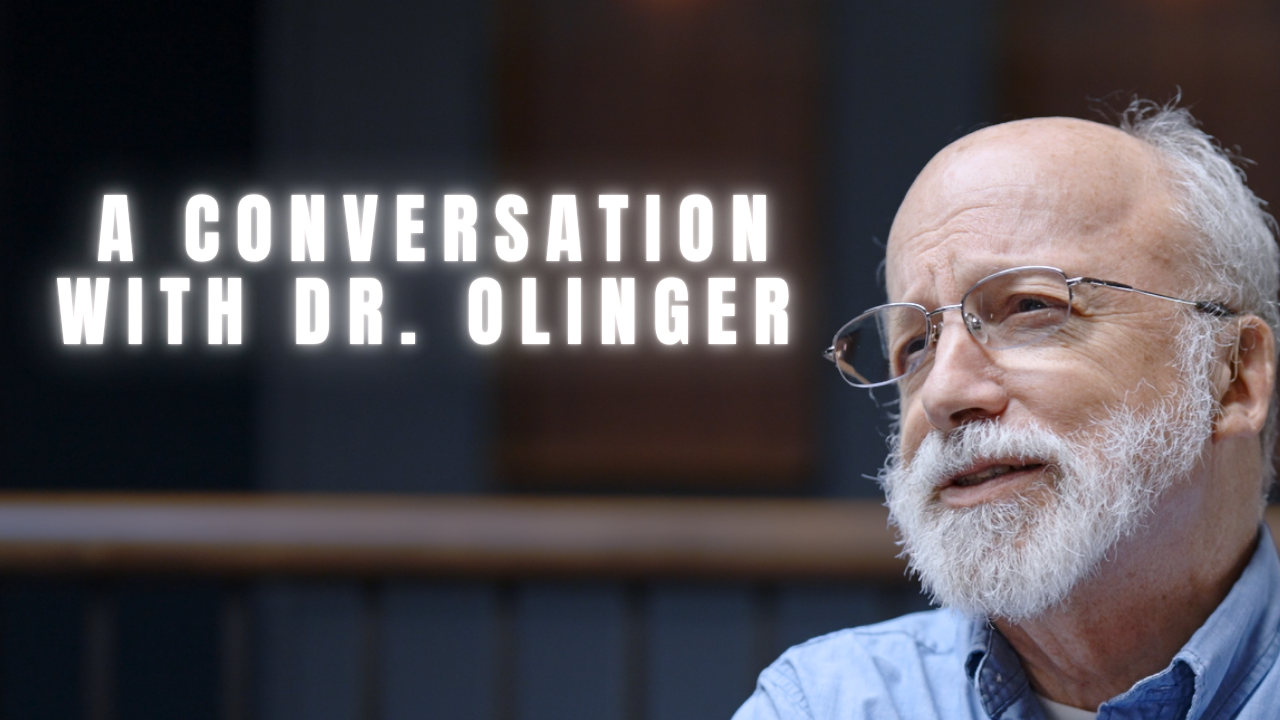
Retiring Professor Dan Olinger Reflects on BJU’s Strengths
This Viewpoint blog post is a companion to the June 30 episode of the Theologically Speaking podcast: part I of a discussion between BJU Seminary Professor Ken Casillas and recently retired Bob Jones University professor Dan Olinger.
Takeaways: We know that pastors can be critical influencers in helping families make college choices, especially when the preference is a Christ-based education. In this Viewpoint, Dr. Dan Olinger, who has just retired after 47½ years of service, 18 years as Chairman, Division of Biblical Studies & Theology at BJU, provides fuel for this thinking as he reflects on three strengths the school offers:
- Its fundamentalist, non-denominational status, therefore offering an objective presentation of denominational positions.
- The central place of biblical theology, which is fully integrated into the undergraduate curriculum.
- The character development also built into the general curriculum.
Excerpts from the conversation follow (lightly edited for length and clarity):
Ken Casillas (KC): We’ve often heard that the real treasure at BJU is the people, particularly the faculty and staff, their lives, and their contributions. The buildings are great, right, but they’re just buildings, right? What would you say makes Bob Jones University distinctive? And you know, we’re almost to our 100th year as an institution. So, as you look back on all that, what do you think this school still has to offer to Christianity and sets it apart?
Dan Olinger (DO): Number one, it’s non-denominational. The founder was a Methodist. Dr (Marshall) Neal (former dean of the School of Religion and Seminary), I think, was Presbyterian. Yes, the vast majority of the students are Baptists, and the vast majority of the rest of them are from Bible churches. So, some people are tempted to think, well, this is a Baptist school, but it’s really not. It never has been. And that means that, from a student’s perspective, you get an objective presentation of all of the denominational positions…. So, we ought to fellowship, and we can hold our distinctives, and we can hold them firmly, baptize those babies, and we can treat with dignity and respect people who disagree with us.
Every summer we have this Bible faculty summit. I remember going to one up at Pillsbury, and guys from conservative Evangelical, you would say, fundamentalist schools are there. We were in the dining common, and I looked down the table, and Mike Barrett was sitting across from Alan Brown.
Both of them had been my professors. Yeah, here Barrett is a dyed-in-the-wool Presbyterian Calvinist. Alan Brown is a Wesleyan “holiness guy.”
KC: That’s right.
DO: And they were eating together and having wonderful conversation, and I said, “That’s what Christianity should look like.”
Now I’m not against denominational schools, but from a student’s perspective, you’re going to get the party line in the denominational school. From a teacher’s perspective, you’re going to have to teach the party line in the denominational school. And I know that in every denomination, they say that’s fine, because our party line is right. But there is something enriching for both the student and the teacher to be able to lay those positions side-by-side and compare them, their strengths and weaknesses.
My last class here was Bible Doctrines, and the unit was eschatology. One of the last things I laid out for them was the strengths of each of the millennial positions.
The strength of amillennialism: Occam’s razor. You don’t need a big, complicated chart on the wall to understand amillennialism.
The strength of premillennialism: literal, grammatico- historical interpretation of prophecy. Then I talked about the weaknesses of premillennialism. What about those sacrifices in the millennial temple? That’s a tough one, and there have been various proposals, but a bunch of us say, I’m not quite sure we’re there yet. You know, it’s liberating, enriching, and strengthening to be able to work those differences and to come to your own viewpoint based on the biblical data.
I think that may be BJU’s greatest strength, and that comes from its foundation in historic fundamentalism.
Another great strength is biblical theology. Biblical theology kind of fell out of favor in the mid- to-late 20th century because it was largely being done by theological liberals. The stuff they were finding was so speculative that people could see through that: there’s nothing there for me. Well, BJU kept doing biblical theology when it wasn’t cool, and now it’s become cool again.
When I was first introduced to biblical theology in seminary, I said, “How did I get an undergraduate degree in Bible here and never hear about this?” About the time I joined the faculty, we started integrating biblical theology back into the undergraduate curriculum. Of course, one of our core courses is systematic theology. We call it “Bible Doctrines” on the undergrad level. We have a bunch of other General Ed Bible courses, and we can work biblical theology into all those things. It works wonderfully, and it’s empowering to the students. I compare it to Daniel Boone crossing the Appalachians and seeing the Great Plains out there and saying, “I never knew this place existed.” You know, it’s wonderful.
A third strength is the character development in the greater curriculum, which includes Student Life and extracurriculars and so on. We’re not just imparting knowledge or skills to get knowledge. But we want these people to be like Christ, and we want them to grow step by step.
We all move at different speeds. I was always a slow starter, you know, and in retrospect, I have all kinds of regrets for those immaturities. I don’t dwell on them because there’s been progress. But shepherding our students, as well as pushing them to academic excellence, not being content with “what does this passage mean to you?” kind of thinking.
KC: That is awesome. I would affirm all of those, and I think you’ve done a great job of not just talking about our strengths, but that gets to the core of our identity—what we have always, by God’s grace, attempted to be. It’s just so encouraging to hear you articulate that from your perspective and, thank God, living it for a long time.